
Rodel Risk Solutions Inc. is a leading international consultancy specializing in risk-informed decision-making for disaster risk management (DRM) and climate change adaptation (CCA).
With over a decade of experience delivering 50+ projects across 20+ countries in partnership with major institutions such as the World Bank, the Asian Development Bank (ADB), the Caribbean Development Bank (CDB), the Asian Infrastructure Investment Bank (AIIB), UNDP, UNEP, national governments, and infrastructure operators, we bridge the gap between risk science, governance systems, and practical resilience actions, translating complex climate and disaster risks into actionable intelligence for planning, investment, and policy execution.
Our expertise is structured around a branded RRS Framework of four core specializations, reinforced by cross-cutting services in project lifecycle delivery, capacity development, and innovation and digital technologies.
This integrated approach ensures evidence-based strategies that protect development gains, safeguard critical infrastructure, and build long-term institutional sustainability.
Every resilient intervention starts with a clear understanding of the existing system. We conduct rigorous analyses of the legal, policy, institutional, and technical frameworks that govern climate and disaster risk assessment (CDRA), disaster risk reduction (DRR), climate change adaptation (CCA), and Loss & Damage (L&D) accounting.
By identifying data-flow gaps, institutional silos, and implementation bottlenecks, we ensure that subsequent investments, reforms, and digital systems are grounded in realistic national capacities and aligned with global frameworks such as the Sendai Framework and the Paris Agreement.
Proven impact: Streamlining national L&D assessment and accounting in Timor-Leste (2025–2026), with prior diagnostic work in Nepal, Lao PDR, and Tajikistan.
We deliver dynamic, all-hazard risk screening and in-depth assessments that integrate physical hazards with exposure, vulnerability, and socioeconomic impacts. Our approach moves beyond map-based analysis to produce decision-relevant evidence for public investment planning, urban development, and infrastructure resilience.
Proven impact: National Risk Atlases in Rwanda and Uganda; National Disaster Risk Census in Mongolia; detailed climate and disaster risk assessments for energy infrastructure in Indonesia (SREAP); facility- and network-level assessments in St. Lucia and Tonga; and economic impact studies across Tajikistan and the Caribbean.
We support a strategic shift from reactive disaster management to proactive development risk management. We help mainstream climate and disaster risk considerations into policies, plans, budgets, procurement processes, and project implementation, enabling informed risk-taking while protecting long-term development outcomes.
Proven impact: Mainstreaming DRM across key sectors in Tajikistan; integrating DRM and CCA into Indonesia’s infrastructure policy framework (KIAT); and advancing urban resilience planning in Vanuatu.
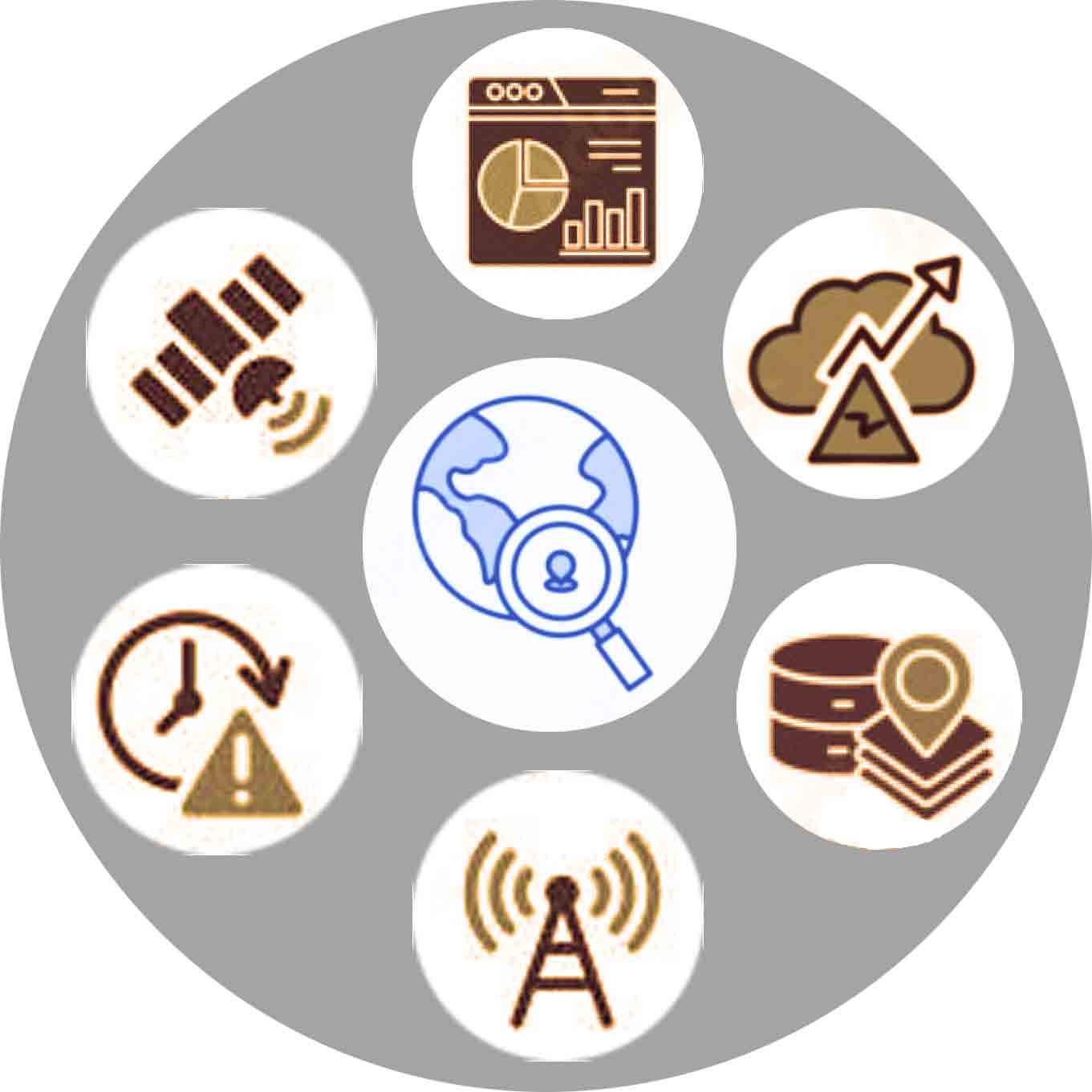
NDO™ & RiskInfo, a dual-engine “Single Source of Truth”
We design and deploy integrated national risk information ecosystems using a Dual Engine approach:
National Disaster Observatory (NDO™) real-time integration of disaster data for rapid impact estimation and operational decision support (“Live Stream”).
RiskInfo Platform structured management of historical, predictive, and probabilistic risk profiles for planning, monitoring, and reporting (“Future Stream”). These platforms connect immediate disaster response with long-term resilience planning, supporting national reporting against the SDGs and Sendai Framework targets.
Proven impact: NDO™ prototype development for China’s National Disaster Reduction Center; three-level risk information platforms in Shanghai Pudong; integration of digital climate and risk maps into Uganda’s national early warning systems.
Cross-Cutting Service Areas
We support a strategic shift from reactive disaster management to proactive development risk management. We help mainstream climate and disaster risk considerations into policies, plans, budgets, procurement processes, and project implementation, enabling informed risk-taking while protecting long-term development outcomes.
Proven impact: Mainstreaming DRM across key sectors in Tajikistan; integrating DRM and CCA into Indonesia’s infrastructure policy framework (KIAT); and advancing urban resilience planning in Vanuatu.

We apply AI-enabled modeling, high-resolution spatial analytics, and real-time monitoring engines to support early warning, disaster chain analysis, and rapid loss estimation, helping clients transition from reactive response to anticipatory risk management.
Selected examples: AI-hybrid pluvial flood disaster chain modeling in China; digital climate vulnerability and risk maps supporting Uganda’s NDC 3.0 (2025–2026).

We provide end-to-end support across the international development project lifecycle, from concept formulation and feasibility studies to implementation support and monitoring and evaluation. Our work is aligned with global frameworks including the Sendai Framework, the Paris Agreement, and the SDGs, ensuring technical rigor and institutional ownership.
Selected examples: ADB-funded DRM and risk insurance program coordination in Mongolia; development of M&E frameworks for UNDP-supported international cooperation funds in China.

We design and deliver tailored training and institutional strengthening programs that translate complex risk analytics into practical governance capability. Our capacity development work emphasizes operational application, sustainability, and inclusive participation, including gender-responsive approaches.
Selected examples: Advanced thematic resilience seminars in China; national-level training programs on CRVA and L&D methodologies in Uganda and Timor-Leste.

We support cities and infrastructure operators in risk profiling, hotspot identification, and resilience mainstreaming across urban systems, transport networks, energy assets, and social infrastructure.
Sector focus areas include: Energy system resilience Road and transport infrastructure Social facilities (schools, health, public buildings)